Description
Texas Sage, also known as Texas Ranger or Purple Sage (Leucophyllum frutescens), is a beautiful, low-maintenance evergreen shrub native to the southwestern United States and northern Mexico. As a favorite of homeowners, landscapers and commercial properties in the Dallas-Fort Worth area, this attractive shrub can thrive in the hot North Texas climate.
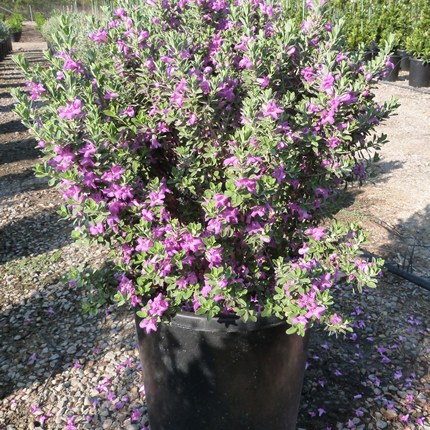
Silvery-gray foliage and stunning purple blooms make this drought-tolerant shrub an attractive choice for many landscapes. The Texas Sage flowers are typically produced after increased humidity or rainfall and give off a beautiful and dramatic display of color for a few weeks.
Texas Sage grows best in full sun and well-drained soil. It can get by with very little supplemental water during the hot summer months in the DFW area. Most varieties of Texas Sage grow 5-8 feet tall and wide. There are also many compact varieties of Texas Sage that grow 2-4 feet tall and wide. It makes a great privacy screen or hedge, and can be used for foundation plantings or as a specimen.
One of the biggest benefits of using Texas Sage in a landscape is its long lasting, unique texture. It contrasts well with brightly colored flowers as well as other green shrubs, making it the perfect plant to pair with a wide variety of different ornamentals, including ornamental grasses, lantana, salvia, agave, yucca, and many other water conserving perennials. Some of the best uses for this extremely drought tolerant shrub is for modern xeriscapes, landscapes that are mostly native plants, hedges and screens, planters and as an accent or specimen in your yard.
Here at Premier Nursery, we have beautiful Texas Sage plants for sale. With all of our plants being of the highest quality and health, we are confident that they will thrive in your landscape. Our knowledgeable staff can assist you in choosing the best variety for your needs and provide information on how to plant and care for your new Texas Sage. With Texas Sage being a very low-maintenance garden shrub, it is a great choice for those looking to replace their current water-hungry shrubs with a beautiful, and native, alternative.
Texas Sage Key Features
- Drought Tolerant: Perfectly adapted to arid climates, Texas sage thrives in hot, dry conditions with minimal water requirements, making it a sustainable choice for water-wise gardens.
- Striking Appearance: The silvery-grey leaves provide a beautiful contrast to the vivid purple flowers, creating a visually appealing landscape element year-round.
- Easy Maintenance: This low-maintenance shrub requires little care once established, making it an excellent option for busy gardeners or those looking for a hassle-free addition to their landscape.
- Wildlife Attraction: Texas sage flowers attract pollinators such as bees and butterflies, promoting a healthy and vibrant ecosystem.
Planting and Care Tips
- Site Selection: Choose a sunny location with well-drained soil. Texas sage thrives in full sun and can tolerate poor, rocky soils.
- Planting: Plant Texas sage in the spring or fall. Dig a hole slightly larger than the root ball, place the shrub in the hole, backfill with soil, and water thoroughly.
- Watering: Water regularly until the plant is established, then reduce watering. Texas sage is highly drought-tolerant and prefers infrequent, deep watering.
FAQs About Texas Sage
Frequently Asked Questions About Texas Sage
- How big does Texas Sage get? – Most varieties of Texas Sage grow to be around 5 to 8 feet tall and wide. There are also more compact versions of this shrub that are more compact in size. These are perfect for the smaller landscapes and only reach to be around 4 feet in height.
- Does Texas Sage need full sun? Texas Sage prefers full sun to partial shade. For the plant to perform its best and flower, it requires at least 6 to 8 hours of direct sunlight per day.
- Why is my Texas Sage not blooming? The reasons for lack of flowers on Texas Sage is due to lack of sunlight, too much water and over-fertilization. The flowers on occasion the flowers will appear after a rain or period of high humidity.
- Is Texas Sage drought tolerant? Texas Sage is extremely drought tolerant. Once established, it will not require a lot of watering and can make it through extended periods of time without any supplemental watering.
- When is the best time to plant Texas Sage in DFW? The best time to plant Texas Sage in DFW is in the spring and the fall when the weather is cooler. This allows the roots to establish themselves prior to the extreme heat of summer and cold winter.
- How often should I water Texas Sage? Watering: Water a newly planted Sage regularly until it has reached maturity (the end of the first growing season). After that, you can water every few weeks in extremely dry weather. Deep watering in these situations is preferred to frequent, shallow watering.
- Can Texas Sage tolerate North Texas winters? Yes. Texas Sage is well-adapted to North Texas and can tolerate the occasional winter on occasion going into freeze.
- Does Texas Sage attract pollinators? Pollinators love Texas Sage. The flowers of Texas Sage attract bees and butterflies and other beneficial pollinators to your garden.
- Should Texas Sage be fertilized? Most landscape plants need to be fertilized, but Texas Sage is not so much. Excessive fertilizer can stop it from flowering and turn it into a large leafy plant.
- Can Texas Sage be used as a hedge? Yes. Its dense growth habit makes Texas Sage an excellent candidate for use in mass as a privacy screen, or used in a hedge. Even as a specimen plant it can be used to mark the property line.
- Is Texas Sage deer resistant? Texas Sage is considered to be moderately deer resistant. The aromatic foliage of this shrub contains is not as desirable to deer as other shrubs and trees in the landscape.
- What plants pair well with Texas Sage? Texas Sage is a great shrub to pair with plants like lantana, salvias, ornamental grasses, red yucca, agave, blackfoot daisy and other drought-tolerant Texas natives.